


Attending Destination Britain Americas, being held in Riviera Maya, Mexico, where 53 British tourism industry suppliers have been conducting meetings with 47 buyers to drive business to Britain, Recommend had a chance to sit down with VisitBritain’s CEO Patricia Yates. We touched on several key points, including U.S. visitation to the UK, the organization’s latest marketing campaign, “Starring GREAT Britain,” which is using the destination’s film and TV locations to inspire visitors to discover more of Britain, travel trends, the importance of the travel advisor to drive business to the UK, and of course those hidden gems you’ll want to tell your clients about.
Recommend: In terms of U.S. travelers to the UK, what are visitation numbers and overall spend?
Patricia Yates: I would say that post-COVID, the recovery has been driven by American visitors. We’re talking about 7.2 billion pounds [spend] this year. For every four pounds spent by an inbound visitor, a pound of that is spent by an American. So hugely, hugely important.
We have seen a sort of softening of the market, so I think there’s a bit of wait and see but talking to operators, there still seems to be a confidence that people will travel. There are economic uncertainties, but travel is now a priority for people. [In terms of visitor numbers,] it’s about five and a half million this year.
Recommend: Tell me about the marketing campaign, “Starring GREAT Britain.”

Yates: I get a buzz just talking about it. It is our most successful campaign ever. I think in part we just hit the zeitgeist, you know, with the global platforms—people all around the world can see the same shows. We did research that showed us that across the world, nine out of 10 people wanted to come to Britain to go and see film locations…and Britain.
Britain is having a real strength in attracting filming to Britain. It’s got good tax breaks and of course, great locations. I’ve just come from the Toronto Film Festival and 40 of those films were produced or co-produced in Britain. That’s huge. So, we’re riding the wave a bit in that our big focus is to make sure that we promote the nations and regions.
The challenge for Britain is half of our international visitors don’t go outside London. You don’t want people to think, “they’ve seen London, they’ve seen Britain.” As a government agency, we want to encourage people to explore more of the nations and regions. Tourism is the great job creator, so making sure we are spreading the economic growth and those jobs across the whole of the UK. “Starring GREAT Britain” has absolutely given us a handle to do that because the destinations can all tell a story [around this]. So whether that’s Bath, when they talk about “Bridgerton,” the West Midlands, it’s “Peaky Blinders”—actually “Peaky Blinders” seems to have been filmed in every city. In Liverpool, it was “Batman”; the new film “Hamnet” was filmed in Herefordshire—a very different view of Britain. And it’s a bit of Yorkshire’s moment with the [new] “Wuthering Heights” [filmed there]—set in a beautiful landscape. I shouldn’t forget to mention “Frankenstein,” [filmed in] Edinburgh and around Scotland and the director has spoken about the experience of filming in in Scotland and how amazing it was to have that atmosphere of the place.
We’ve committed two to three years to this campaign and that’s given both destinations and the travel trade the confidence to build products that can then be sold to tell that story and I think that’s a real success.
Recommend: VisitBritain has aimed to push travelers beyond London; which destinations do you see getting the most attention?
Yates: The Northeast is really coming together as a group of destinations—I mentioned Yorkshire. We’ve done a lot of work to encourage people to go to the Northeast.
Recommend: When is the best time to visit the Northeast?
Yates: I love going to Yorkshire in the spring because all the daffodils come out across the moors; they are just beautiful. So, it’s not high season—sort of early and sort of slightly off season I think is lovely. So, I would absolutely say Yorkshire in the spring.
Manchester and Liverpool are year-round cities—you could go anytime and have a great time there. And then of course the Lake District. It’s quite a compact area—you’ve got amazing cities that you could spend a great weekend at, but you’ve also got beautiful countryside.
Recommend: What trends are you seeing with U.S. travelers traveling to the UK? What are they seeking out that maybe they didn’t a few years ago?
Yates: I think a global trend that Britain is capitalizing on is that move to experience a destination [more authentically]. I think for a historical destination—we know that’s our main draw—I think we’ve been really good at telling the stories about that and giving visitors a real experience. And not just…you stand in a building, you have a photo taken.
So, for example, [take] “Downton Abbey,” it’s not just the story of the people who lived upstairs, but you can go down to the kitchens and experience what it was like to have a different story in the same location. So, I think we’ve been very good at not being too prissy about our history but really thinking about how you connect to it. And that’s important to tell a different story, but also to realize that our history won’t have the same resonance to all our visitors. If you’re looking at American Boomers, there is that connectivity. If you are looking at Gen Z, are they going to know who Churchill is, even so, so you have to tell [the story], but you have to tell a different story, don’t you? And get the connectivity there.
I think people looking for experiences and people looking for authenticity and a sense of place—our history is absolutely authentic. Those buildings have been there for centuries.
[Also] I think what was perhaps regarded as a weakness for travel to Britain—our food—has become a real strength. We have great chefs and we have really good local dishes. Visitors can eat at smaller restaurants, eat local food and have the story of “from farm to fork” told to them in the restaurants. I think that’s what people are looking for—something that’s almost an emotional connection, personal to them. We’re absolutely working to do that.
Recommend: You mentioned Boomers and Gen Z—what’s the most popular demographic going to the UK?
Yates: We aim things more at a mindset. People who want to explore—we are trying to get people who go off the beaten track a bit more, and I think that [cuts] across all generations. Who’s driving the travelers? Probably the Boomers who’ve got the money.
I think probably we’re strongest at the 25 to 45 [age group], but that Boomer audience is really important as well.
Recommend: How do you work with travel advisors to speak to their clients to sell the regions beyond London or the other main tourist draws?
Yates: There’s a process of education there, isn’t there? We have to build a product with destinations and make sure they’re ready for international buyers. We need to educate destinations on what international trade is looking for and then make sure we are telling those stories in a compelling way to the tour operators and to the agents so that they can sell with confidence. That’s obviously part of what we’re doing at Destination Britain Americas—it’s bringing people down so that they can talk face-to-face with destinations, think about expanding their product and then we will go behind that and support in telling those stories.
Recommend: What role do you see travel advisors playing in shaping the future of tourism in Britain?
Yates: That’s really interesting because if you think pre-COVID, when we were looking at the world and we were thinking, you know, we have limited money, who do you work with, we were saying, well, [travel advisors] are going to die out—it’s going be OTAs. Then post-COVID, you wanted to talk to people. You don’t want to talk online to a machine again…the travel trade has become more important.
There’s so much information isn’t there, so when you are thinking about going to a destination, how do you make the choice and how do you think about some of the practicalities, you know? [Travel advisors] are even more important in America now.
Recommend: Last question—any specific hidden gems or experiences that you’d like to see the trade highlight more when putting together itineraries?
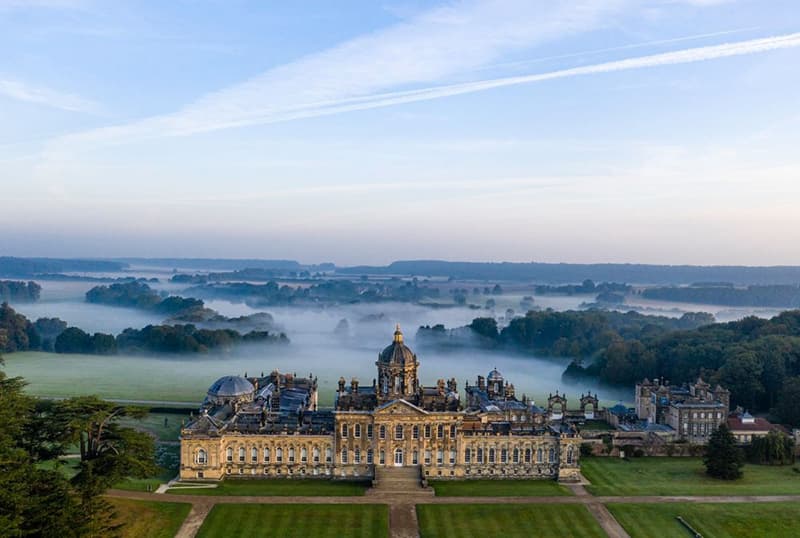
Yates: I love Yorkshire. The moors are just beautiful, you’ve got Castle Howard and you’ve got coastline there as well. It’s a beautiful destination—that’s obviously why [they] call it “God’s Own Country.”


