


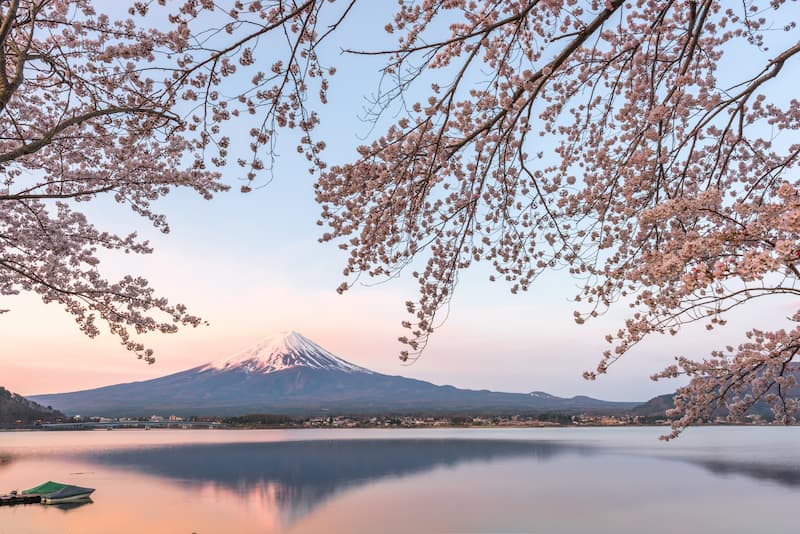
The cherry blossoms will soon be falling in Japan, but one city is looking to stem the influx of tourists for the annual cultural event.
The city of Fujiyoshida has cancelled its annual Arakurayama Sengen Park Cherry Blossom Festival, citing past misbehavior by some of the hundreds of thousands of people who attend the event each year. A highlight is taking photos of the sacred Mt. Fuji framed by cherry blossoms and a temple.
More Visitors Than Cherry Blossoms
Local residents said the small town cannot accommodate the growing number of festival visitors—estimated to peak at more than 10,000 per day—and cited problems such as public urination, littering, overcrowding and traffic and other disturbances to local life.
Attendance at the festival has boomed as the value of the Japanese yen has weakened, making visits to the island nation more affordable. Japan saw a record 42.7 million foreign visitors last year.
“Behind [Mount Fuji’s] beautiful landscape is the reality that the quiet lives of citizens are threatened. We have a strong sense of crisis,” said Fujiyoshida Mayor Shigeru Horiuchi, according to the Japan Times. ”To protect the dignity and living environment of our citizens, we have decided to bring the curtain down on the 10-year-old festival.”
Cancelling the festival won’t completely solve the overtourism problem; however, the favored photo spot is in a public park with 650 cherry trees, and visitors will likely come to snap their pics in April. To adapt, Fujiyoshida officials plan to implement better crowd control measures and install portable toilets in the park.
Other towns in Japan have gone as far as erecting barriers to spoil such shots and dissuade tourists.
Cherry blossom viewing, known as hanami, is an integral part of Japanese culture dating back to the 8th century. While the cancellation of the Fujiyoshida festival is a major symbolic blow, visitors can still see sakura, the cherry trees, in many other parts of Japan.


