


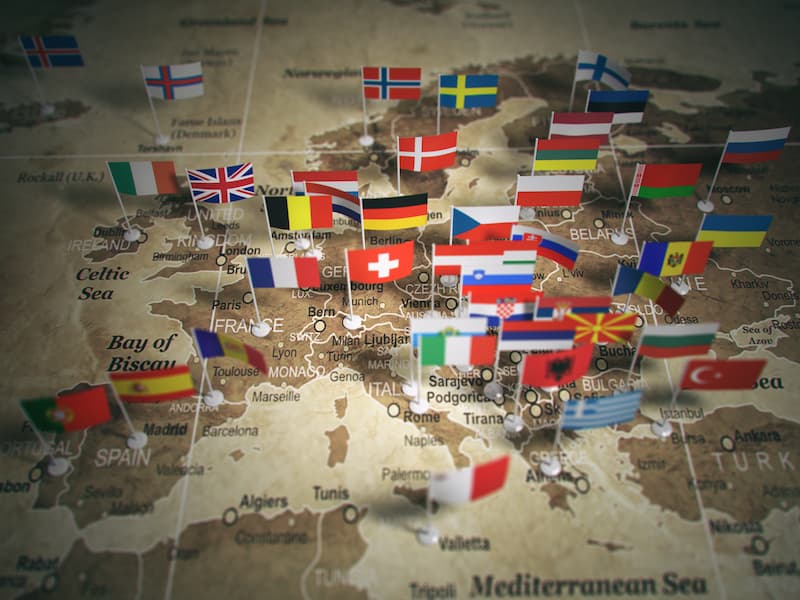
Travelers heading to Europe should be prepared for significant delays at border crossings this summer.
Implementation of the European Union’s new Entry/Exit System (EES), which launched on April 10, has been accompanied by delays that have stretched to three to six hours during busy periods. The delays have become so bad that the World Travel and Tourism Council (WTTC) recently warned that they are putting European tourism at risk.
Border Delays Mount
A May 2026 WTTC survey of international travelers found that about one-third of those surveyed said they would be much less likely to visit Europe, or avoid visiting altogether, if the experience entailed a three-to-four-hour delay at the border.
The delays, which primarily affect non-EU travelers, including those from the U.S., Canada and Great Britain, have sometimes caused travelers to miss flights.
The WTTC report noted that about half of international travelers said they are unfamiliar with the EES system or requirements for crossing the borders of the Schengen Area, which comprises the 29 European countries that have abolished passport and immigration controls at their individual borders.
Antoinette Leon, Senior VP and Chief Operating Officer of ItsEasy.com, a passport and visa service company, attributed the delays to first-time registration processing time, adjustments to new procedures and technology at airports and border posts and staffing shortages.
Airports in Portugal, Spain, Belgium, Italy and France have experienced some of the worst delays, she said.
Expert Advice
“If you’re traveling to Europe, build these projected delays into your itinerary so you arrive at the airport much earlier than usual, and expect extra time at passport control if you’re entering the Schengen Area from outside Europe,” advised Leon. “Keep your passport readily available — do not pack it away after security — [and] follow airport instructions closely for biometric registration.”
WTTC President and CEO Gloria Guevara said that while research shows that travelers support digital and biometric border systems, and understand the long-term benefits they can deliver, “the challenge now is … how governments, border authorities and the travel and tourism sector work together to ensure implementation is as smooth as possible.
“The good news is that solutions already exist. By making greater use of digital pre-registration tools, improving traveler communications and ensuring operational readiness at border crossing points, Europe can reduce friction and deliver the seamless experience travelers expect.”


