


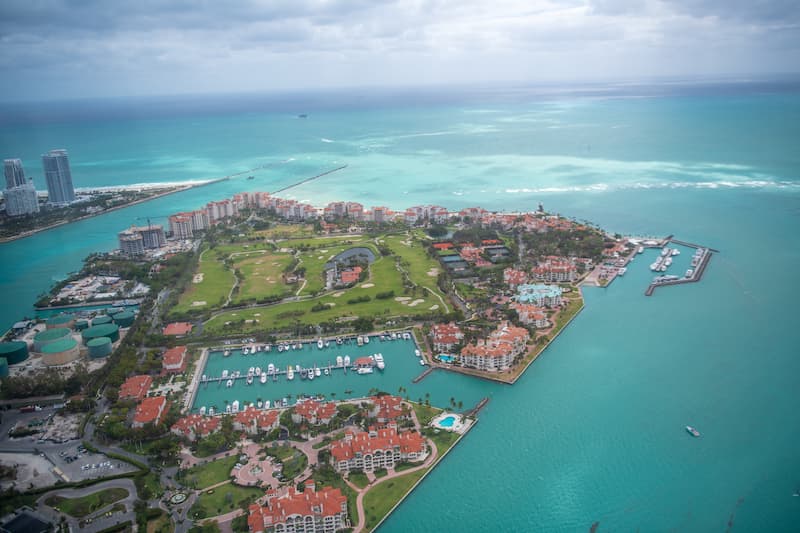
Property owners on an exclusive island enclave in Miami are fighting the purchase of a rare, undeveloped piece of property on the island that’s currently used as a fuel depot for cruise ships.
The property, on Fisher Island in Biscayne Bay, was purchased by a real estate developer, HRP Group, for $180 million last year. Originally, the developer announced plans to convert the land from a fuel depot storing 28 million gallons of marine diesel into luxury condominiums as part of an estimated $2 billion development project. The deal struck with the Fisher Island Community Association (FICA) would also have required HRP to cede four acres of the property to FICA.
Miami-Dade Takes Over
However, HRP Group recently sold the property to Miami-Dade County for $400 million, reaping a fat profit without having to put a shovel in the ground. That has Fisher Island residents crying foul, decrying the fact that the purchase would leave the cluster of unsightly fuel tanks on the island intact.
Miami is the world’s busiest cruise port, and local officials said it was essential to maintain the fuel depot despite the hefty price tag on the property. The purchase came after island residents helped block the county’s plan to seize the fuel depot by eminent domain.
“HRP came to Fisher Island promising to clean up a century-old hazard and build a residential community,” said James L Ferraro, the chairman of FICA, which is suing to force HRP to honor its original deal. “Instead, they saw a pile of taxpayer cash, sold out our residents and decided to leave a dangerous fuel farm sitting right next to our homes.”
Joe Garcia, a Miami community leader and former member of Congress, said the county made an expensive mistake in not securing the property before the lease on the land expired.
“You can’t have a port without a fuel depot, and everyone involved here knew this was an indispensable asset,” Garcia told The Guardian. “We’re paying someone $220 million for something that we couldn’t have lived without. Anywhere else but Miami-Dade County, that would be a criminal act.”


